
Introduction
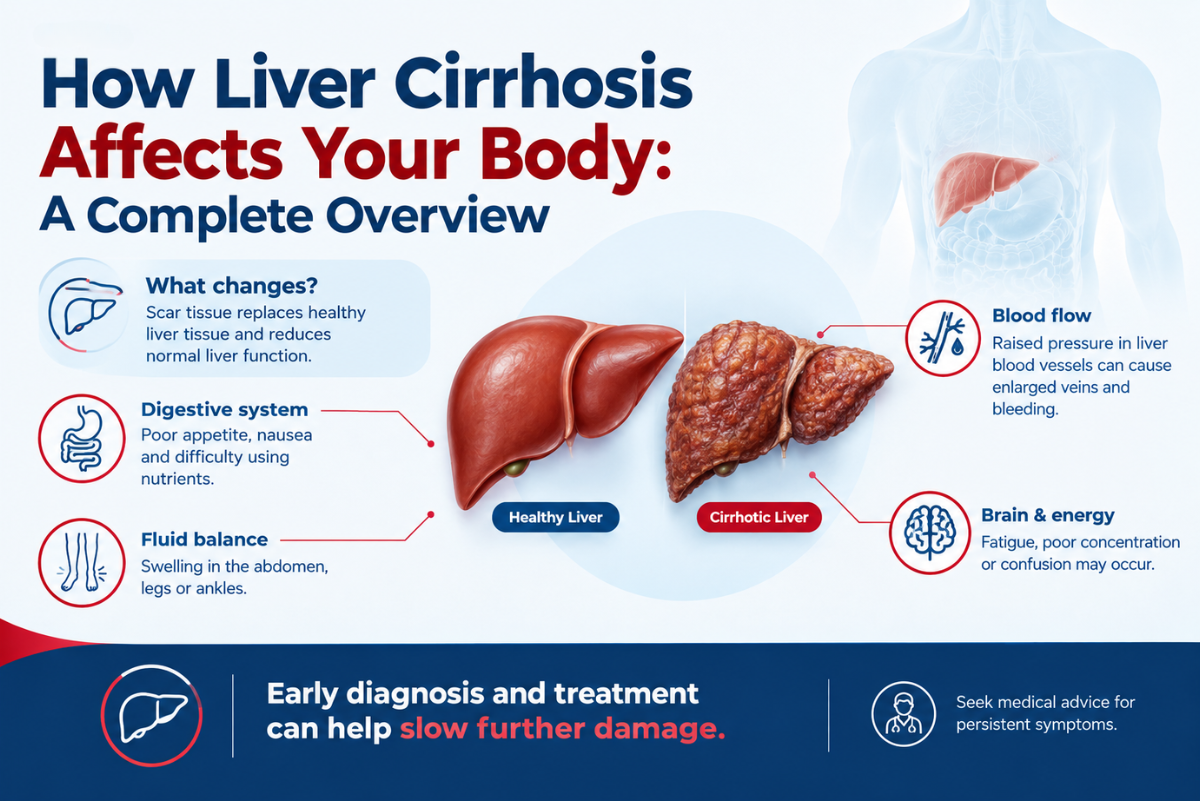
The liver performs many essential functions, including processing nutrients, producing important proteins, supporting digestion, and helping remove waste from the body. When long-term liver injury causes healthy tissue to be replaced by scar tissue, cirrhosis can develop. As the condition progresses, the liver may have increasing difficulty performing its normal functions, and its effects can extend to several other parts of the body.
What Happens to the Liver During Cirrhosis?
Liver Cirrhosis develops gradually in many cases. Repeated or long-term liver injury can cause fibrosis, in which scar tissue forms within the liver. As scarring becomes extensive, it can interfere with normal blood flow and reduce the liver's ability to perform important functions.
The causes can vary and may include chronic viral hepatitis, alcohol-associated liver disease, metabolic liver disease, and certain other medical conditions. The progression is not the same for everyone, which is why identifying and managing the underlying cause is important.
How Liver Cirrhosis Can Affect Different Parts of the Body?
Digestive System and Appetite Changes
Changes in appetite, nausea, digestive discomfort, and poor nutrition may occur as liver disease advances. Some people may also experience unintended weight loss or nutritional deficiencies.
Blood Flow and Increased Pressure in the Portal Vein
Scarring can restrict normal blood flow through the liver and increase pressure in the portal vein. This condition, called portal hypertension, can contribute to several complications, including enlarged veins in the digestive tract and fluid accumulation.
Abdomen and Fluid Accumulation
One important complication is ascites, which occurs when fluid collects in the abdomen. Swelling can also develop in the legs, ankles, or feet. Increasing abdominal swelling should be medically assessed because ascites can sometimes become infected.
Skin, Eyes, and Other Visible Changes
As liver function becomes impaired, some people may develop jaundice, causing the skin or whites of the eyes to appear yellow. Itching, dark urine, and easy bruising can also occur with liver disease. These changes should not be ignored, particularly when they are persistent or accompanied by other symptoms.
Brain Function and Mental Alertness
Advanced liver dysfunction can affect the brain through a condition known as hepatic encephalopathy. It may cause confusion, difficulty concentrating, memory problems, changes in sleep patterns, or altered alertness. Medical assessment is important when these changes occur.
Blood Clotting and Bleeding
The liver produces proteins that help the blood clot normally. Significant liver dysfunction can therefore contribute to easy bruising or bleeding. Portal hypertension can also cause enlarged veins, known as varices, in the oesophagus or stomach. If these veins bleed, urgent medical care is required.
Common Complications of Advanced Liver Cirrhosis
As cirrhosis progresses, complications may become more significant. These can include ascites, variceal bleeding, infections, hepatic encephalopathy, nutritional problems, and kidney-related complications.
Cirrhosis also increases the risk of liver cancer. For this reason, people with cirrhosis may require regular monitoring and liver cancer surveillance as recommended by their healthcare team.
How Doctors Diagnose and Monitor Cirrhosis?
Evaluation generally begins with a medical history and physical examination. Doctors may use blood tests to assess liver function and other aspects of health, along with ultrasound or other imaging studies. In selected cases, additional tests may be needed to assess the extent or cause of liver damage.
Regular follow-up is important because cirrhosis can change over time, and monitoring can help doctors identify complications early.
Can Liver Cirrhosis Be Managed?
Treatment depends on the underlying cause and the extent of liver damage. Managing the cause may help slow further damage, while medicines, dietary measures, procedures, and regular monitoring may be used to manage complications. Cirrhosis related scarring generally cannot simply be reversed, so preventing further liver injury is an important part of care.
When Liver Transplantation May Be Considered?
When cirrhosis progresses to severe liver failure, transplantation may become an option for selected patients. A liver transplant surgeon is part of the specialist team involved in assessing and performing transplantation when appropriate.
Liver transplant treatment involves more than the operation itself. Patients typically undergo detailed medical evaluation to determine whether transplantation is suitable, followed by surgery and long-term medical follow-up. A liver transplant replaces the diseased liver with a healthy donor liver and may be considered when the liver can no longer function adequately.
Living With Cirrhosis Requires Ongoing Medical Care
Liver Cirrhosis is a long-term condition that requires appropriate medical supervision. Recognising changes in symptoms, following the recommended treatment plan, attending regular check-ups, and monitoring for complications can all form part of ongoing care. If you have been diagnosed with cirrhosis or notice symptoms suggesting worsening liver function, discuss them with a qualified liver specialist rather than relying on self-diagnosis.