
Does Everyone With Cirrhosis Need a Liver Transplant?
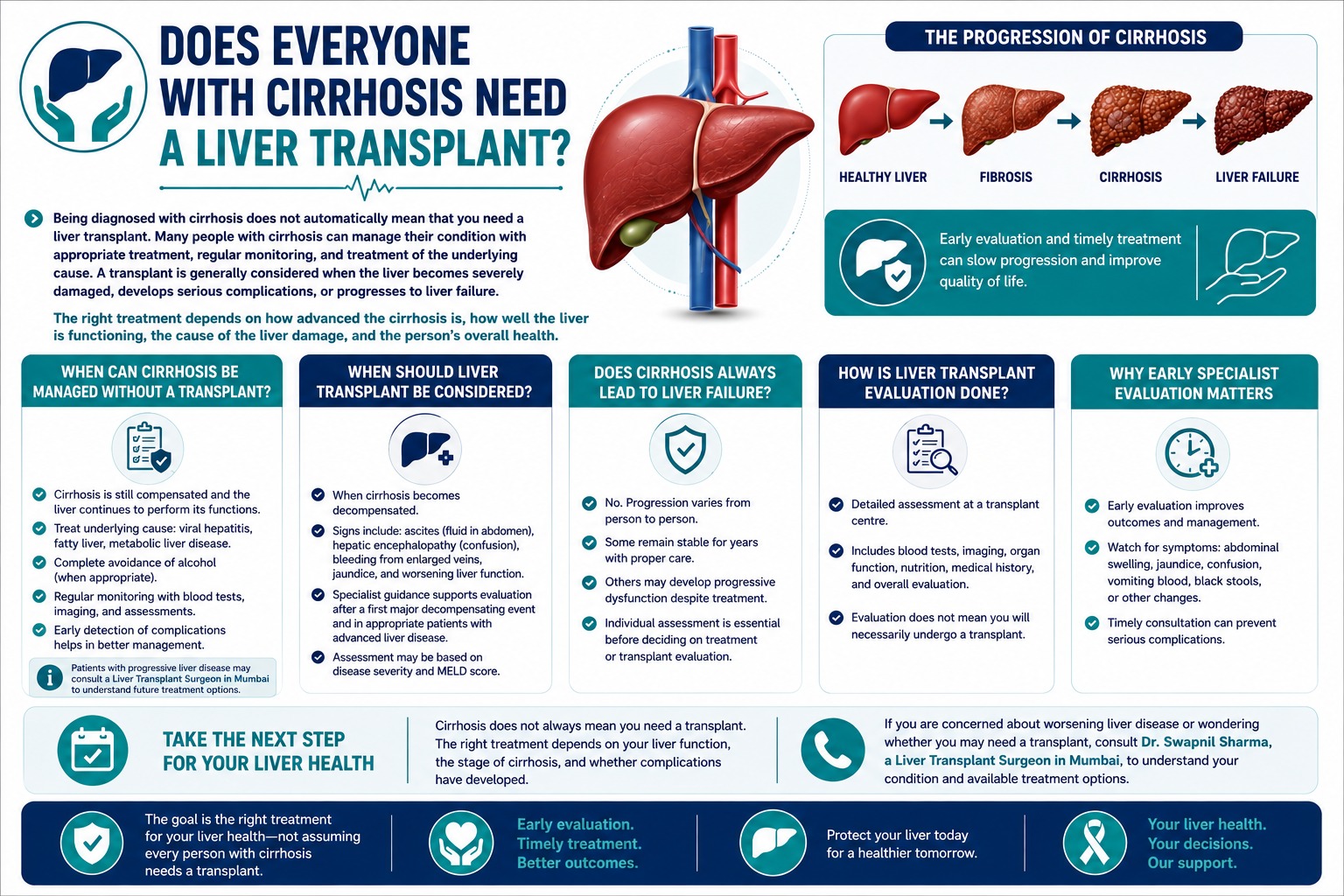
Being diagnosed with cirrhosis does not automatically mean that you need a liver transplant. Many people with cirrhosis can manage their condition with appropriate treatment, regular monitoring, and treatment of the underlying cause. A transplant is generally considered when the liver becomes severely damaged, develops serious complications, or progresses to liver failure.
The right treatment depends on how advanced the cirrhosis is, how well the liver is functioning, the cause of the liver damage, and the person’s overall health.
When Can Cirrhosis Be Managed Without a Transplant?
If cirrhosis is still compensated, meaning the liver continues to perform its important functions and serious complications have not developed, treatment may focus on controlling the underlying cause and preventing further damage.
For example, doctors may treat viral hepatitis, manage metabolic or fatty liver disease, and, when appropriate, recommend complete avoidance of alcohol. Patients who are being monitored for progressive liver disease may also consult a Liver Transplant Surgeon in Mumbai to understand how changes in liver function could affect their future treatment options.
Regular monitoring remains important to identify complications early and adjust treatment when needed.
Regular follow up is important because cirrhosis can change over time. Blood tests, imaging, and other assessments can help doctors monitor liver function and identify problems early.
When Should Liver Transplant Be Considered?
A liver transplant for cirrhosis may be considered when the disease becomes decompensated or the liver can no longer function adequately.
Important signs of decompensation include ascites, which is fluid buildup in the abdomen, hepatic encephalopathy, which can cause confusion or changes in mental function, and bleeding from enlarged veins in the digestive tract. Jaundice and worsening liver function can also indicate advanced disease.
Current specialist guidance supports considering liver transplant evaluation after a first major decompensating event and in appropriate patients with advanced liver disease. Transplant assessment may also be considered based on disease severity and scores such as MELD.
Does Cirrhosis Always Lead to Liver Failure?
No. Cirrhosis can progress differently from one person to another. Some patients remain stable for a long period when the underlying cause is controlled and complications are properly managed. Others may develop progressive liver dysfunction despite treatment.
This is why it is important not to assume that you need a transplant simply because you have been diagnosed with cirrhosis. A specialist needs to assess your individual condition and determine whether cirrhosis treatment or transplant evaluation is appropriate.
How Is Liver Transplant Evaluation Done?
If your doctor believes you may benefit from transplantation, you may be referred to a transplant centre for a detailed assessment. This evaluation can include blood tests, imaging, assessment of kidney and other organ function, nutritional status, medical history, and an overall evaluation of whether transplantation is suitable for you.
Being referred for an evaluation does not necessarily mean that you will undergo a transplant.
Why Early Specialist Evaluation Matters
Waiting until severe symptoms develop may make liver disease more difficult to manage. If you have cirrhosis and notice increasing abdominal swelling, jaundice, confusion, vomiting blood, black stools, or other significant changes, seek medical attention promptly.
Dr. Swapnil Sharma can review your medical history, liver function tests, imaging reports, and current symptoms to help determine whether you need continued medical management or should be assessed for liver transplant surgery.
The goal is to recommend an appropriate treatment pathway based on your individual liver health rather than assuming that every person with cirrhosis needs a transplant.
Take the Next Step for Your Liver Health
A diagnosis of cirrhosis does not always mean that a liver transplant is necessary. The right treatment depends on your liver function, the stage of cirrhosis, and whether complications have developed.
If you are concerned about worsening liver disease or wondering whether you may need a transplant, consulting Dr. Swapnil Sharma, a Liver Transplant Surgeon in Mumbai, can help you understand your condition and available treatment options.
An early evaluation can provide clarity and help you take the right step for your liver health.