
Introduction
Liver tumours can develop for different reasons and may be benign or malignant. In the early stages, some liver tumours may cause few or no noticeable symptoms, making regular medical evaluation important for people with known liver disease or other risk factors. When symptoms do appear, they can sometimes resemble common digestive or general health problems. Recognising persistent changes and getting them assessed can help identify the underlying cause.
Understanding How Liver Tumours Can Develop
A liver tumour is an abnormal growth of cells in the liver. Some tumours begin in the liver itself, while others spread to the liver from cancers that started elsewhere in the body. Primary liver cancers include hepatocellular carcinoma and other less common types.
The risk of certain primary liver cancers can be higher in people with long-standing liver conditions. Liver Cirrhosis, for example, can increase the risk of hepatocellular carcinoma. However, having cirrhosis does not mean that a person will necessarily develop liver cancer.
Early Changes That May Need Medical Attention
Unexplained Weight Loss or Reduced Appetite
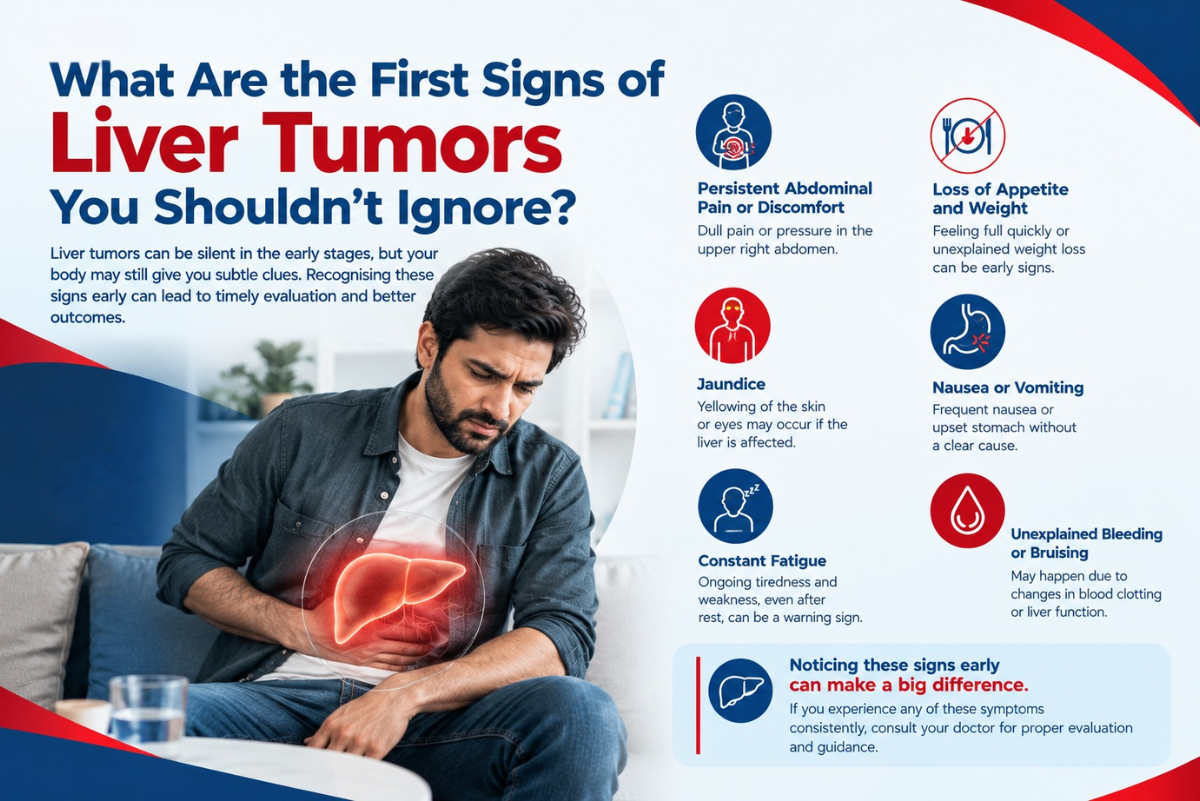
Losing weight without intentionally changing your diet or activity level can have many causes. Persistent loss of appetite or unexplained weight loss, especially when combined with other symptoms, should be discussed with a healthcare professional.
Ongoing Pain or Fullness in the Upper Right Abdomen
The liver is located in the upper right portion of the abdomen. Some people with liver tumours may experience discomfort, pressure, or a feeling of fullness in this area. Persistent or worsening abdominal symptoms should be evaluated rather than assumed to be simple indigestion.
A Lump or Feeling of Fullness Under the Ribs
In some cases, an enlarged liver or mass may create a feeling of fullness beneath the right ribs. This symptom can also occur because of several other conditions, so examination and appropriate testing are needed to determine the cause.
Persistent Fatigue and Weakness
Unusual tiredness or weakness can accompany many health conditions, including liver disorders. Fatigue alone does not indicate a tumour, but persistent unexplained changes deserve medical attention, particularly when other symptoms occur at the same time.
Nausea or Digestive Changes
Nausea, early fullness, or changes in appetite can occur with various gastrointestinal and liver-related conditions. If these symptoms continue, recur frequently, or are accompanied by weight loss or abdominal discomfort, a doctor may recommend further evaluation.
Yellowing of the Eyes or Skin
Jaundice causes the skin or whites of the eyes to become yellow because of increased bilirubin levels. It can occur with liver disease, bile duct obstruction, and several other conditions. New or unexplained jaundice should be assessed promptly.
Dark Urine or Pale-Coloured Stools
Changes in urine or stool colour can sometimes occur when bile production or flow is affected. Dark urine or unusually pale stools may occur alongside jaundice and should be discussed with a healthcare professional when persistent.
Abdominal Swelling or Fluid Build-Up
Abdominal swelling may occur when fluid accumulates in the abdomen, a condition known as ascites. Ascites can be associated with advanced liver disease and other medical problems and requires appropriate medical assessment.
When Liver Cirrhosis Increases the Need for Monitoring
People with liver cirrhosis may need regular monitoring because cirrhosis is an important risk factor for hepatocellular carcinoma. Surveillance may involve periodic imaging and other assessments recommended by the treating medical team.
Regular monitoring is important because liver cancer can sometimes be detected before noticeable symptoms develop. The appropriate surveillance schedule depends on the individual's condition and clinical risk factors.
How Doctors Investigate a Suspected Liver Tumour
Evaluation usually begins with a medical history and physical examination. Blood tests may be used to assess liver function and, in appropriate situations, tumour markers may also be considered.
Imaging plays an important role. Ultrasound may be used for initial assessment, while CT or MRI can provide more detailed information about a suspected liver lesion. Depending on the findings, additional tests may be recommended to establish the diagnosis.
When Specialist Liver Care Becomes Important
A suspected or confirmed liver tumour may require assessment by specialists from different areas, depending on the type and stage of the disease. A liver transplant doctor may be involved when a patient has advanced liver disease or when transplantation needs to be evaluated as part of the treatment plan.
The appropriate approach depends on the tumour, liver function, overall health, and other individual factors.
Where Liver Transplant Treatment May Fit
Liver transplantation is not suitable for every liver tumour. In carefully selected patients with certain liver cancers, particularly when significant underlying liver disease is also present, transplantation may be considered according to established clinical criteria.
Liver transplant treatment involves detailed evaluation before surgery, assessment of tumour characteristics and liver function, the transplant procedure when appropriate, and long-term follow-up after transplantation.
Importance of Early Medical Assessment
Symptoms alone cannot confirm the presence of a liver tumour, and many of these signs can have causes unrelated to cancer. However, persistent abdominal discomfort, unexplained weight loss, jaundice, abdominal swelling, or other unusual changes should not be ignored. Timely medical evaluation can help determine the cause and guide appropriate care.