
Introduction
The liver performs several important functions, including processing nutrients, removing waste from the blood, producing proteins, and helping with digestion. Liver problems can develop for different reasons, including fatty liver disease, viral infections, alcohol-related damage, certain medicines, and other medical conditions. In the early stages, some people may have few or no noticeable symptoms. However, certain changes should not be overlooked, especially when they persist or become worse.
Why Early Liver Problems Can Be Easy to Miss?
Liver damage does not always cause obvious symptoms at first. Some signs may also resemble common digestive or general health problems. Paying attention to persistent changes and discussing them with a healthcare professional can help identify the underlying cause before the condition progresses.
10 Early Signs That May Point to Liver Problems
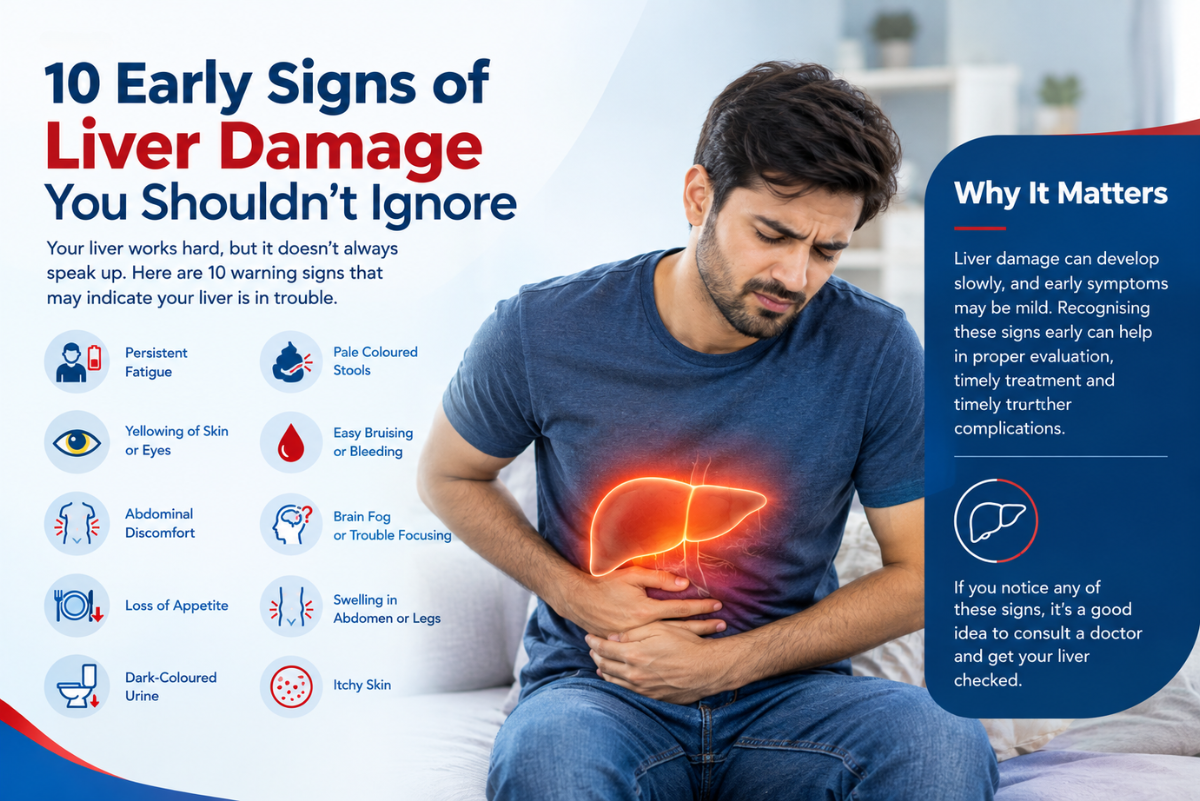
1. Persistent Tiredness and Low Energy
Feeling unusually tired despite getting adequate rest can occur with some liver conditions. Persistent fatigue is not specific to liver disease, but when it continues without an obvious explanation, it is worth discussing with a doctor.
2. Loss of Appetite or Unexplained Weight Loss
A noticeable decrease in appetite or losing weight without deliberately changing your diet or activity level can sometimes accompany liver disorders. Unexplained weight loss should be medically evaluated, particularly when other symptoms are present.
3. Nausea or Frequent Digestive Discomfort
Nausea, a feeling of fullness, bloating, or general digestive discomfort may occur with different health conditions. If these symptoms continue or repeatedly return, a medical evaluation can help determine whether the liver or another organ is involved.
4. Yellowing of the Eyes or Skin
Yellow discoloration of the skin or whites of the eyes, known as jaundice, can occur when bilirubin builds up in the body. It may be associated with liver disease, bile duct problems, or other conditions and should not be ignored.
5. Dark Urine or Pale-Coloured Stools
Changes in urine and stool colour can sometimes occur when normal bile processing or flow is affected. Dark urine, unusually pale stools, especially when accompanied by jaundice, warrant medical attention.
6. Pain or Discomfort in the Upper Right Abdomen
The liver is located in the upper right portion of the abdomen. Discomfort or a feeling of fullness in this area may occur with certain liver conditions. Persistent abdominal symptoms should be assessed rather than attributed to indigestion alone.
7. Swelling in the Abdomen or Legs
Fluid accumulation can cause swelling in the abdomen or lower limbs, particularly in people with more advanced liver disease. New or increasing abdominal swelling requires timely medical assessment.
8. Persistent Itching Without an Obvious Skin Cause
Ongoing itching without a clear skin condition can sometimes be linked to problems involving bile flow. While itching has many possible causes, persistent unexplained symptoms should be discussed with a healthcare professional.
9. Easy Bruising or Unusual Bleeding
The liver contributes to the production of proteins needed for normal blood clotting. When liver function becomes significantly impaired, some people may bruise more easily or experience unusual bleeding.
10. Difficulty Concentrating or Changes in Alertness
Significant liver dysfunction can sometimes affect brain function, leading to confusion, changes in concentration, sleepiness, or altered alertness. Sudden or severe changes require prompt medical attention.
When These Symptoms Need Medical Evaluation?
Having one of these symptoms does not automatically mean that you have liver damage or liver cancer. Many of these signs can occur because of other health conditions. However, persistent, worsening, or multiple symptoms should be evaluated by a healthcare professional. Yellowing of the eyes or skin, significant abdominal swelling, unexplained weight loss, confusion, or unusual bleeding deserve particular attention.
How Liver Problems Are Diagnosed?
A doctor may begin with a medical history and physical examination before recommending tests. Depending on the symptoms, these may include liver function blood tests, viral hepatitis testing, ultrasound, CT or MRI scans, and other investigations. The specific tests depend on the suspected cause and the individual's medical history.
When a Liver Specialist May Be Needed
Some liver conditions can be managed with lifestyle changes and medicines, while others require specialist care. If there is a concern about a liver tumour, a liver cancer doctor may be involved in diagnosis and treatment planning. For severe liver disease or irreversible liver failure, a liver transplant surgeon may assess whether transplantation is appropriate.
A liver transplant is considered only for selected patients with serious liver disease when the medical team determines that transplantation may provide a suitable treatment option. Early assessment can help doctors understand the condition and determine the appropriate next steps.
Early Attention Can Make a Difference
Liver-related symptoms can be subtle, and waiting for them to become severe is not always advisable. Paying attention to persistent changes, getting appropriate tests, and following medical advice can help identify liver problems and their underlying causes. If you notice unusual or ongoing symptoms, speak with a qualified healthcare professional rather than relying on self-diagnosis.